Item 1 of 2
Properties
Properties of the Stone
Additional Names
Marmor Scyrium, Breccia di Settebasi, Semesanto
Color(s)
White, Red, Gray, Yellow
Scientific Classification
Brecciated Marble
Commercial Classification
Marble
Quarry Site
Skyros Island-Greece
Quarry State
Inactive
Origin and Geological Characteristics of Skyros (Iskiri) Marble
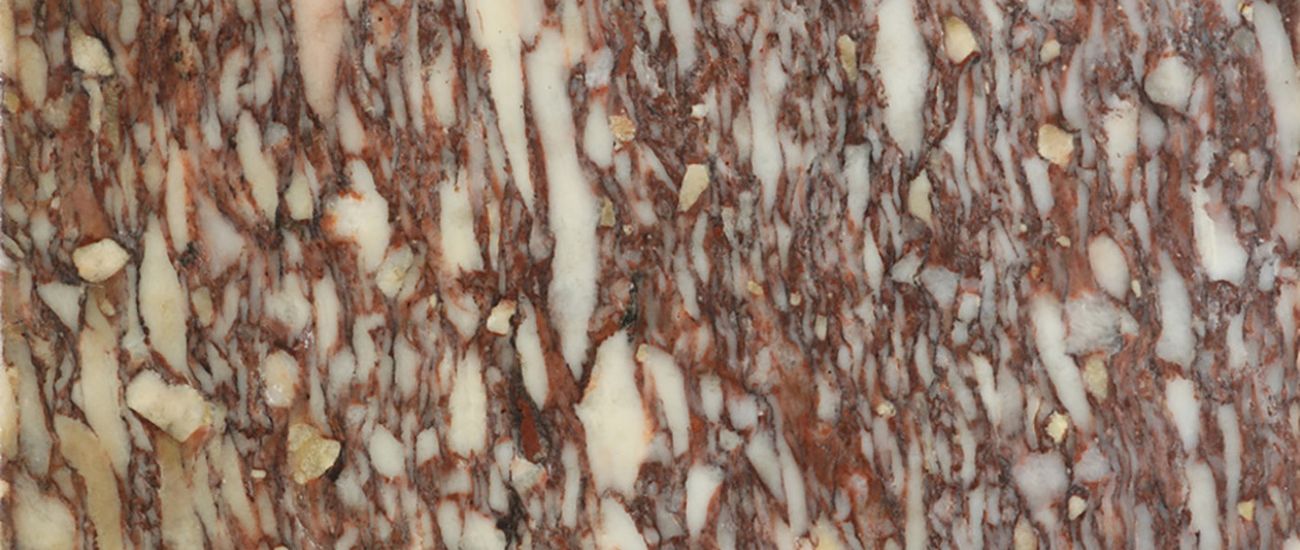
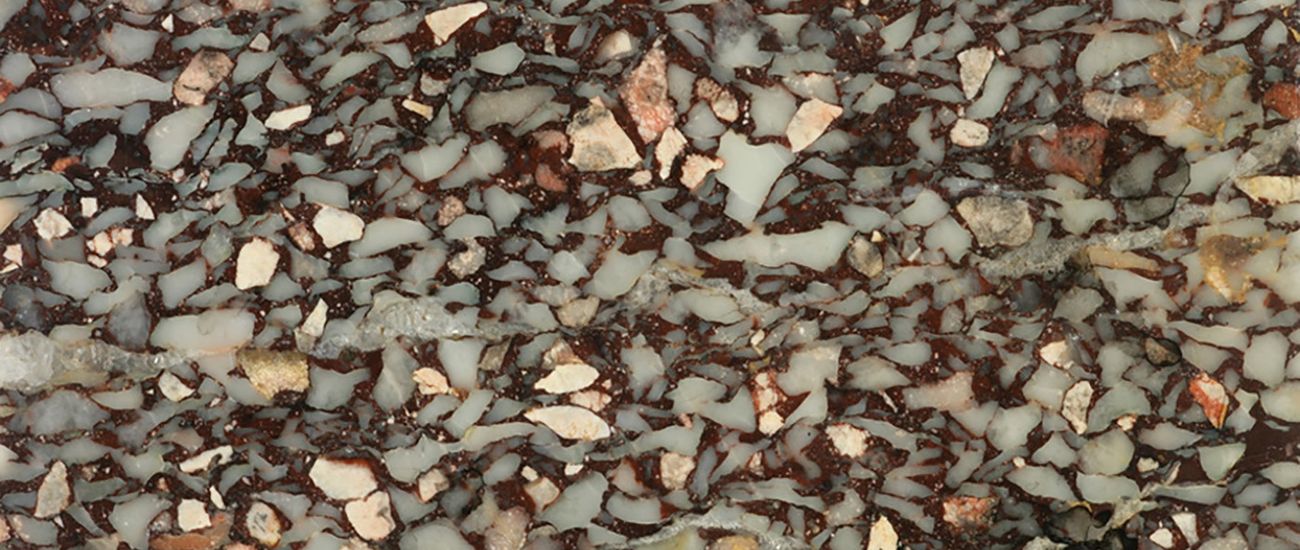
The ancient quarries of Skyros Marble are located on the Greek island of Skyros are dated to the Triassic-Early Jurassic period. Scientifically classified as a type of Brecciated Marble, this stone consists of white and gray marble pebbles formed through metamorphism. The natural cement binding the marble pebbles is rich in iron oxide (hematite), giving it a red colour.
Historical Use and Nomenclature: A Roman Period Example
In the 4th century AD, Skyros Marble was used in the Roman villa of the city governor Septimus Bassus, known as the 'Villa dei Sette Bassi.' Italian stonemasons called this marble ‘Breccia di Settebasi.’
Typological Variation: The ‘Semesanto’ Variety
Another type of Skyros Marble, which contains small-sized marble pebbles and resembles sunflower seeds is called ‘Semesanto’ by Italian stonemasons.
Use of Skyros Marble in Ottoman Architecture
Breccia di Settebasi was used as cladding stone on the exterior walls of the Revan Pavllion in Topkapı Palace, while Semesanto was used as flooring in the courtyard with a fountain at the Bayezid Mosque.
Historical Buildings
Buildings using this stone
_276x160.jpg)
Item 1 of 1