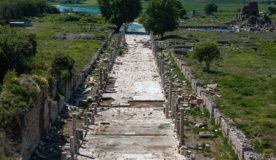
One of the main streets of Ancient Side has been unearthed
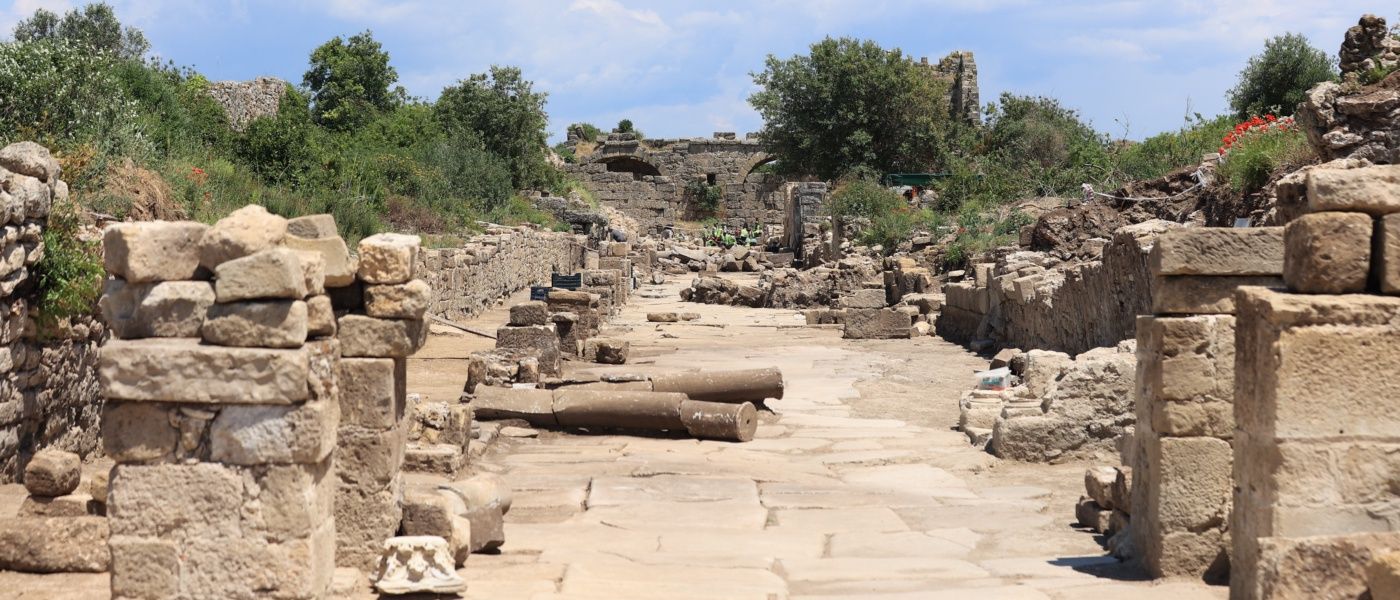
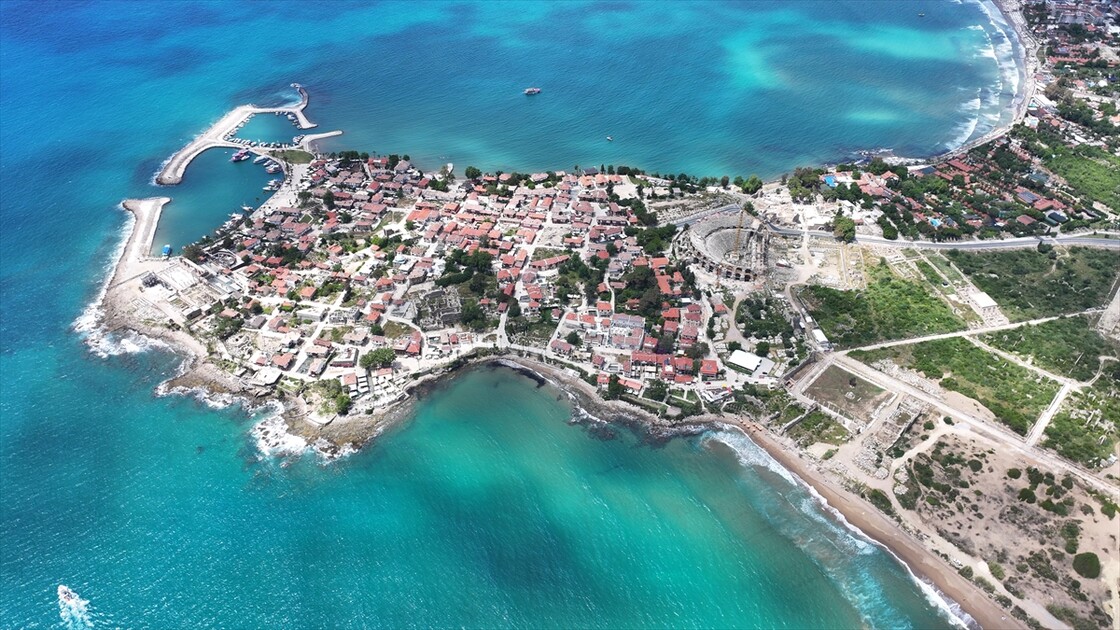
Side, which was the most important port city of Pamphylia in ancient times, is situated on a peninsula 350–400 metres wide, seven kilometres south-west of the Manavgat district of Antalya. The city’s name means ‘pomegranate’ in the Luwian language (1).
Prof. Dr Feriştah Alanyalı, Director of Excavations at the Ancient City of Side and a lecturer in the Department of Archaeology at the Faculty of Arts, Anadolu University, stated to the AA correspondent that the opening of the street is significant for the ancient city, noting that excavation and restoration work has been accelerated in recent years under the Ministry of Culture and Tourism’s ‘Heritage for the Future’ project.
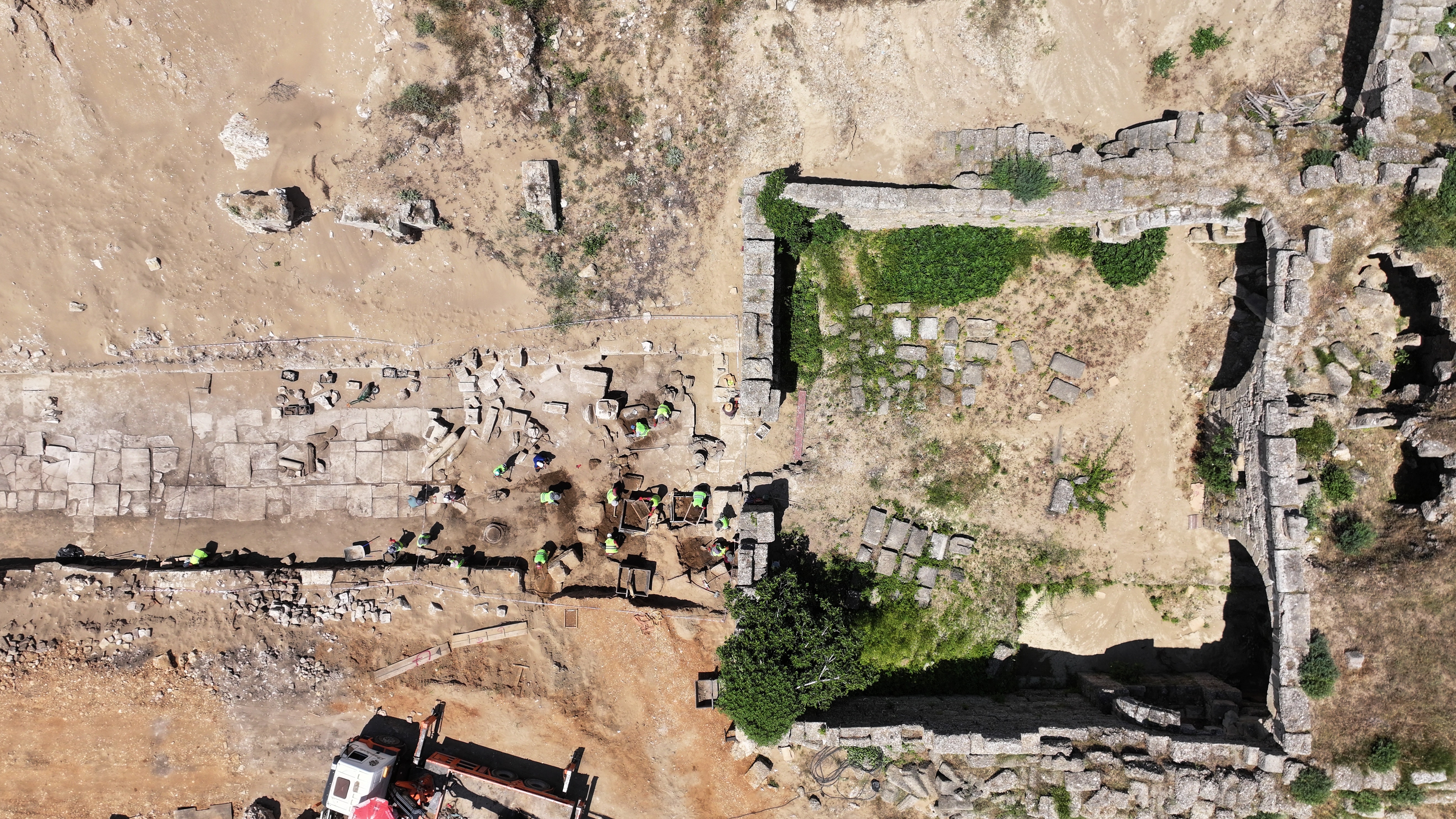
Alanyalı noted that they had uncovered the street, which leads to the East Gate—one of the city’s two main gates in antiquity—and was constructed during the early imperial period. She explained that through this, they had gained important insights into the city’s history and the historical phases of the street’s use. She added that this had provided them with an opportunity to identify and interpret the historical processes of the region (2).
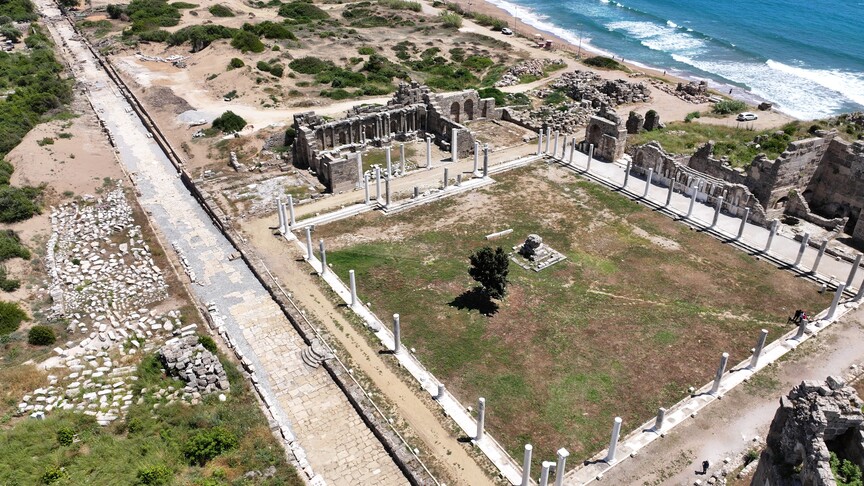
Photo: Bekir Bektaş/AA
The Eastern City Gate of Side
According to Arif Müfid Mansel’s preliminary report of the 1966 excavation, the gate consists of three chambers (A, B, C) constructed from conglomerate blocks -forming horizontal layers with a cross-sectional thickness of 55–60 cm- without mortar, and covered with cradle arches made of conglomerate wedge stones of approximately the same dimensions . Above the gate building, which comprises two passageways and one enclosed chamber, there is a terrace with an irregular rectangular plan corresponding to the lower level. Weapon reliefs were discovered on this terrace in 1964. The floor of the terrace was decorated with mosaics made of large black and white stones dating from the Byzantine period. To the right and left of the gate stand two rectangular towers. The eastern and southern walls of the southern tower (No. 12), constructed during the Byzantine period using spolia materials and a generous amount of lime mortar, rise upon Hellenistic foundations. It has been established that the northern tower (No. 11a) is almost equal in size to the other.
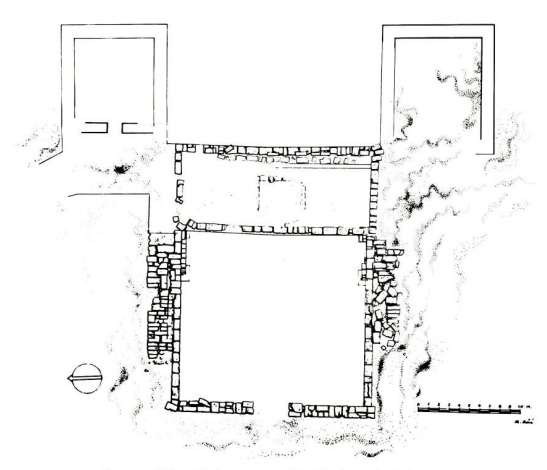
Image: Stone plan of the Eastern City Gate (B, Aran – A. Dâi)_1966 (Ansel)
“The eastern gate of Side must have sustained considerable damage from earthquakes and wars over the centuries, as it was repaired and restored on numerous occasions during the Byzantine period. Apart from the towers, most of which are Byzantine in their present form, the front retaining wall of Passage C and the rear, or western, façade of Area B, along with the parapet wall above it, point to much later periods due to their careless construction style, which differs from Hellenistic craftsmanship.
As the courtyard, unlike the city’s main gate courtyard, was not transformed into a portico during the Roman period—by having its inner walls clad in marble and a multi-storey colonnade erected in front of it—no architectural or sculptural works have been found there.
Thus, another example has been added to the Hellenistic-period gate complexes with courtyards that are characteristic of the region of Pamphylia. A striking diversity is evident in the plans of these gates, even within a relatively small region such as Pamphylia.”
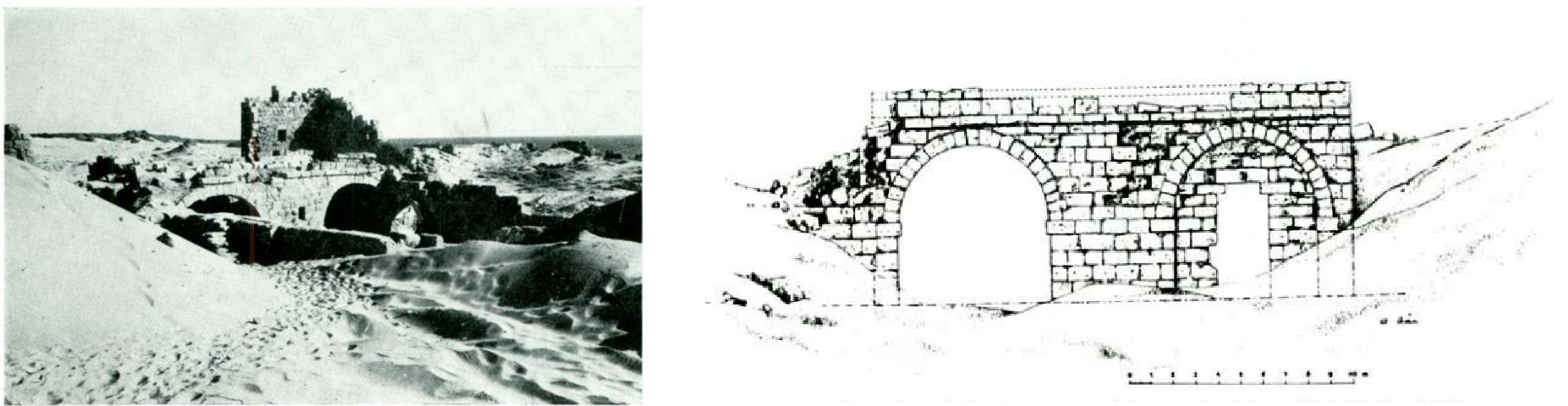
Left: Fig. 5. The eastern (outer) façade of the city gate Right: Fig. 6. The former state of the eastern façade of the city gate (A. Dâi) _1966 (Ansel)
In his report, Mansel emphasises that Side’s eastern city gate retains the character of an original gate when compared to gates in Anatolia and Greece (such as those at Perge, Sillyon, Selge, Dura-Europos, Assos, Mantineia, and Stratos), and that, based on the many features he highlights in the report, it also possesses a design of significant defensive importance. He notes that the gate differs from the others listed in the report, particularly due to its two passageways, but that it bears a resemblance only to the Dipylon Gate in Athens(3).
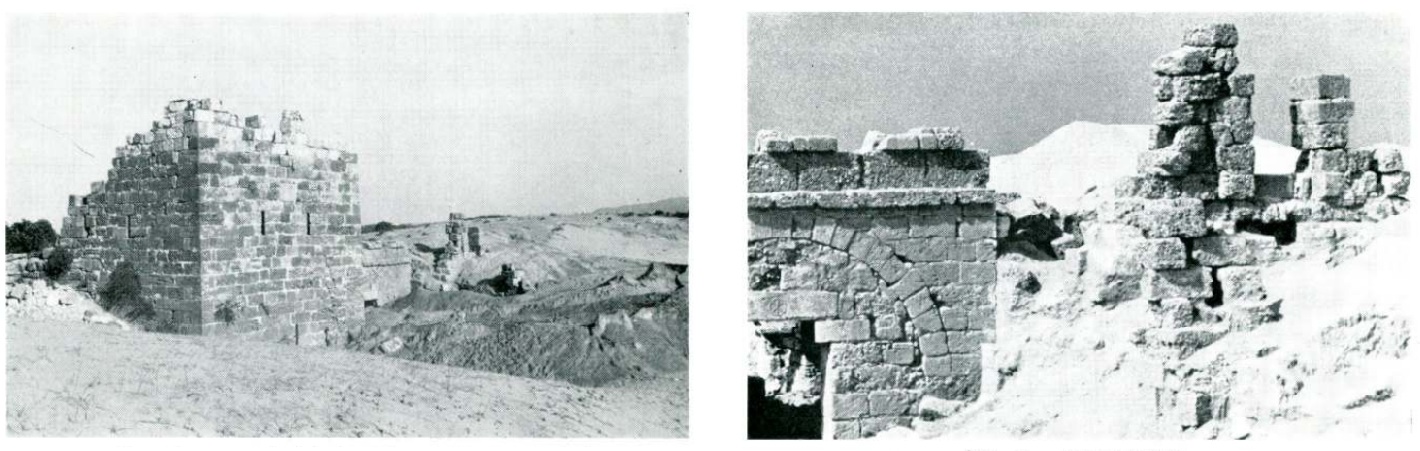
Left: The east and south façades of Tower No. 12 Right: Tower No. 11a _1966 (Ansel)
Ozan Çakmak summarises the findings from later research, particularly that conducted after 2011, as follows: apart from the wall line dated to the Hellenistic Period, the investigations revealed that the East Gate had undergone four distinct phases of use. Based on the artefacts recovered, the earliest phase of the structure is dated to the second half of the 1st century BC. The second phase, identified through stratigraphic excavations, is dated to the second half of the 1st century AD and into the 2nd century AD; it is understood that the structure was in use during this period with some architectural alterations. In the third phase of the structure, dated to the 3rd–4th centuries AD, evidence was found that the ground in front of the western courtyard wall had been raised and that the street axis leading from the East Gate to the agora and Structure M had been constructed. In the final phase of use, determined to date to the 7th century AD as a result of the excavation work, it is understood that the doors providing access to the building were walled up and lost their function.(4)
Side’s ancient harbours
Noting that Side was once an important part of Mediterranean trade and that recent excavations had uncovered a Bronze Age ship’s anchor on the banks of the Alara River, Alanyalı pointed out that this clearly demonstrated the existence of intense maritime trade in the region as far back as the 2000s BC. She also explained that, with the help of these findings, they were able to understand that people came from the Aegean and the Black Sea, and that it was a cosmopolitan city engaged in trade: “Side is an important maritime city, but it is also an agricultural city due to the alluvial soils brought by the Melas River. The sand carried by the water quickly fills the harbour after a while. They were constantly dredging the harbour, but eventually the people of Side were forced to relocate it. In our research, we identified other harbours of varying sizes in the region."(2)
Notes and References:
1. https://www.kulturportali.gov.tr/turkiye/antalya/gezilecekyer/side-1
2. AA news https://www.aa.com.tr/tr/kultur
3.Arif Müfid Mansel (1968). Side'nin Doğu Şehir Kapısı (1966 Kazısına Dair Önrapor). Belleten, 32(), 127-138.
4. Çakmak, O. (2025). Son Araştırmalar Işığında Side'nin Geç Hellenistik-Erken Roma İmparatorluk Dönemi Şehirciliği Üzerine Gözlemler. Side Antik Kenti Araştırmaları 2 / 2009-2019 Yılları Arasındaki Araştırmalar.
Actual Photos: Bektaş /AA
Photos and figures of Eastern Gate 1966: Arif Müfid Mansel (1968) Side'nin Doğu Şehir Kapısı (1966 Kazısına Dair Önrapor). Belleten, 32(), 127-138.
Recent News
Street unearthed in Aspendos
Restoration of Haydarpaşa Station continues
#Haydarpaşa Train Station #Lefke Stone (sandstone) #Hereke Granite
Stoneline Publications’ third book: SELİMİYE

Sümela Monastery reopened to visitors

International Mustafa V. Koç Underwater Archaeology Symposium
#Prokonnesos quarry #Verde Antico #Marmor Docimium, Pavonazzetto, Afyon Violet
The Granikos Battlefield has been placed under protection
#Marmara marble #Prokonnesos marble #Granikos Battle
The Second Edition of Mimarlar İçin Doğal Taş Rehberi and the English Edition, Natural Stone Guide for Architects, Have Been Published
The historic Yalı Pavilion is to be reconstructed
The theme of the Edirne Biennial: Bridges
A ‘stone hospital’ has been set up in Ephesus for the restoration of stones