1500 years of mosaic unearthed in Dara
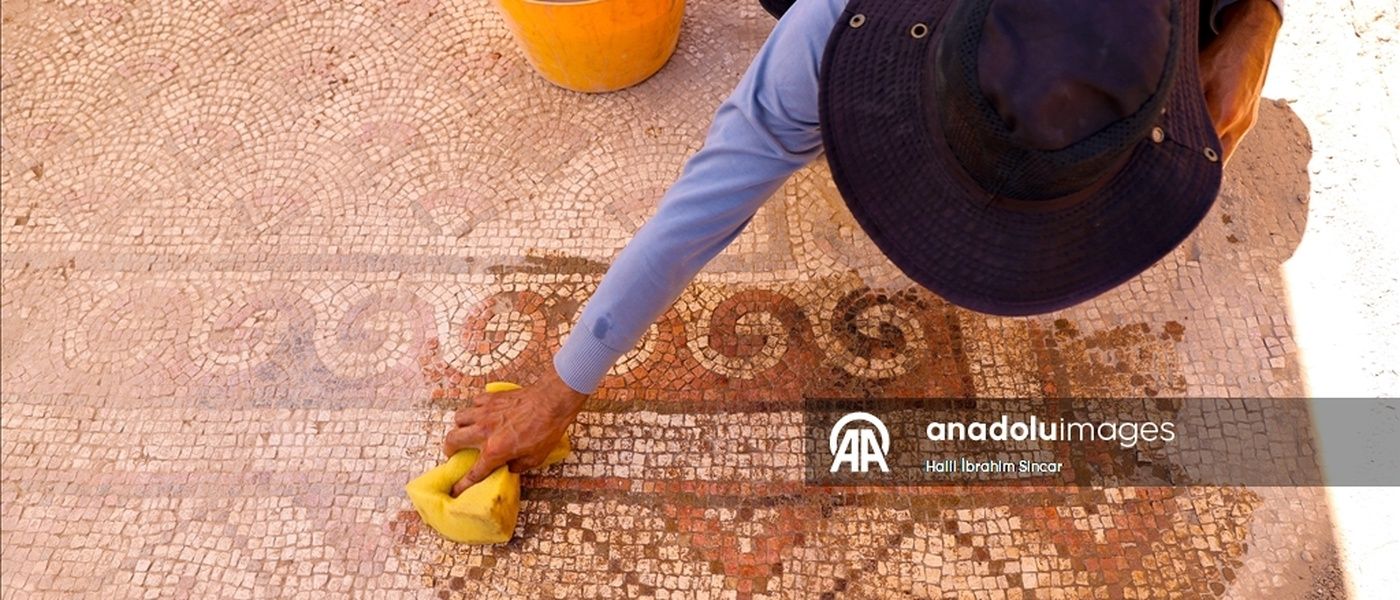
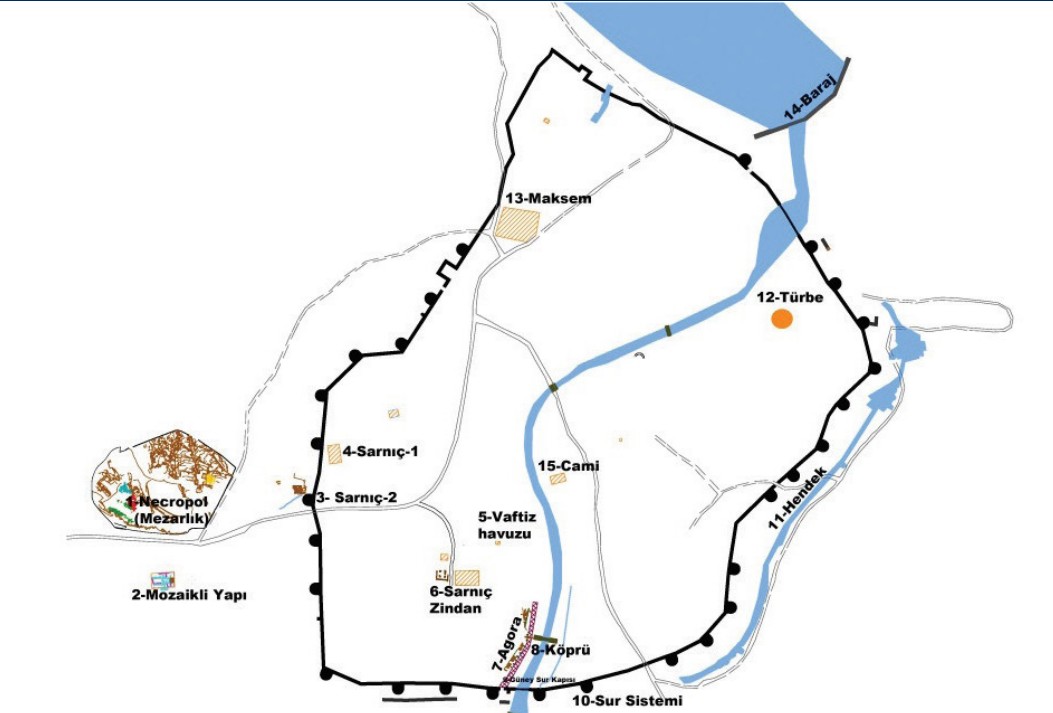
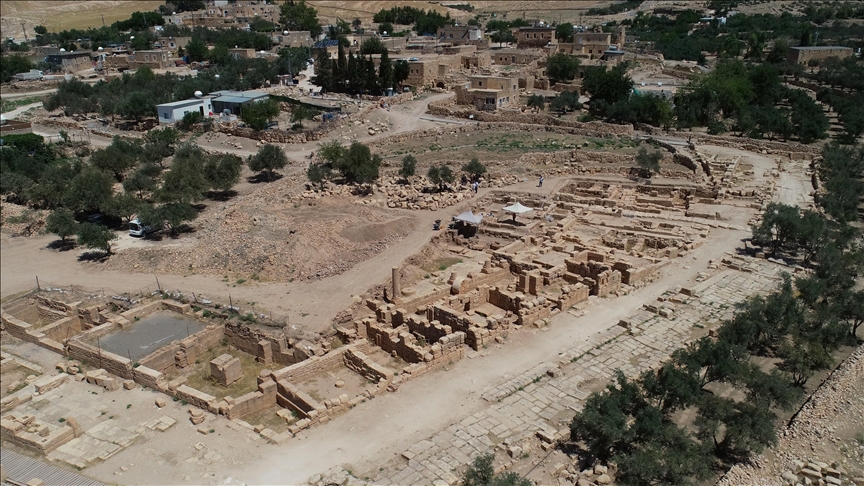
Dara (Anastasiopolis) is located 30 km southeast of Mardin city, 18 km north of Nusaybin, and 7 km north of the city of Amuda in Syria. The city walls, spread over an area of 4 kilometers, include the Inner Castle, which is situated on the upper plain of a hill 50 meters high in the northern part of the city. The city was built on a limestone bedrock at the junction of the Mesopotamian plain and the Tur-Abdin Mountains, consisting of structures carved into the rock and spread over a large area. In the ancient city of Dara in Mardin's Artuklu district, approximately 1500-year-old mosaics featuring drop and wave motifs were found.
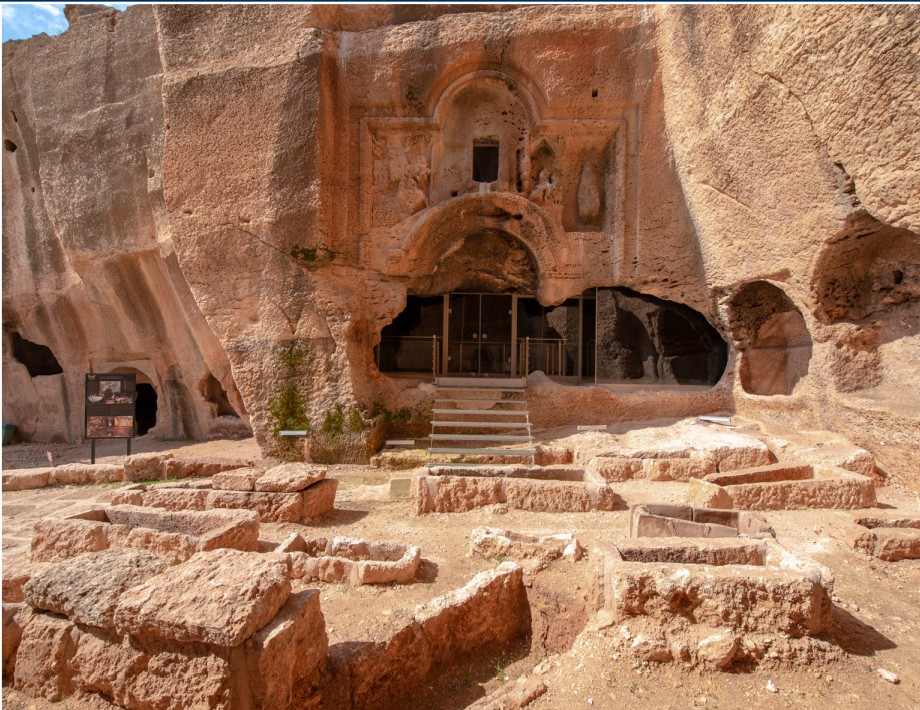
The excavation works that began 38 years ago in the Ancient City of Dara, which was established to protect the borders of the Eastern Roman Empire against the Sasanians, have been continuing under the Ministry of Culture and Tourism's 'Legacy for Future Project'since last year. Located 30 kilometers from the city center in Oğuz Neighborhood, the excavations and archaeological research conducted so far have revealed remains of a necropolis (a site with collective graves), a church, a palace, an agora (market), a dungeon, a foundry, and a water dam. Over 10,000 arrowheads, lamps, glass, ceramics, and jewelry artifacts have been found in the region.
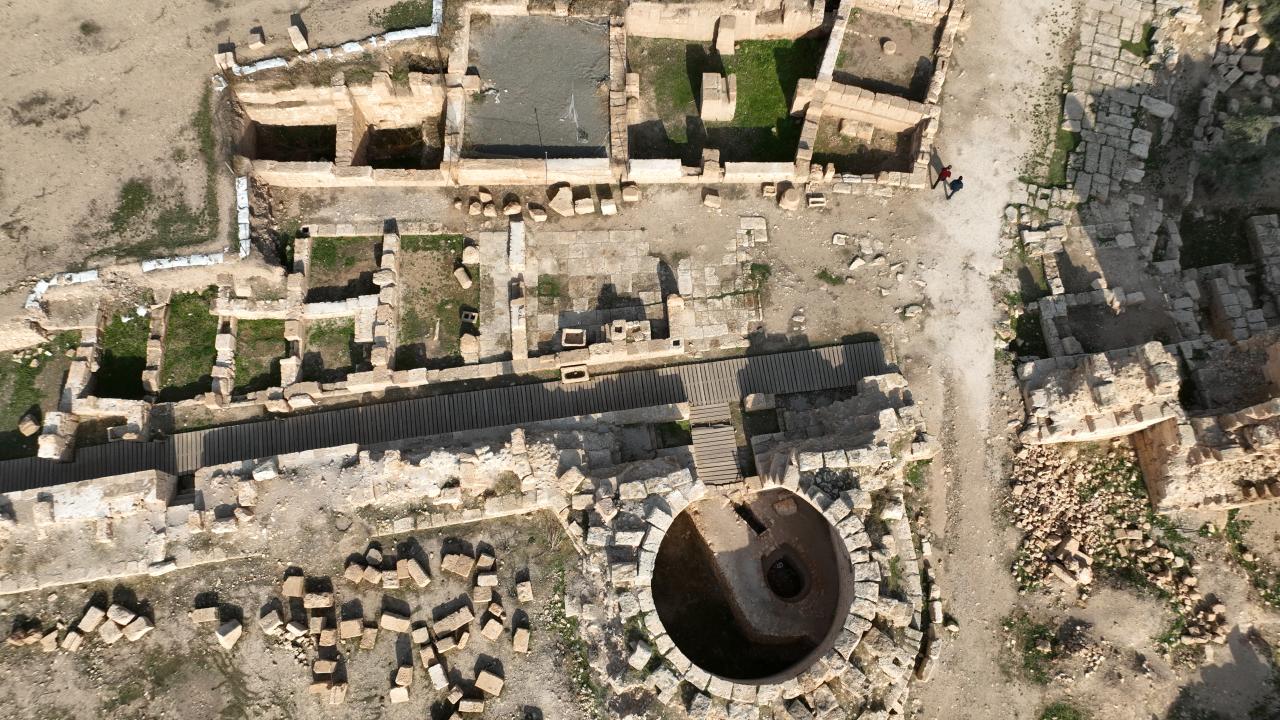
During the excavations led by the Mardin Museum, a 1500-year-old drinking water system from the Roman period was unearthed in the agora, along with nearly 20 shops and workshops. This year, in the excavations, a mosaic area with droplet and wave figures, approximately 1500 years old, was discovered in structures considered to have been used as residences, right next to the shops and workshops.
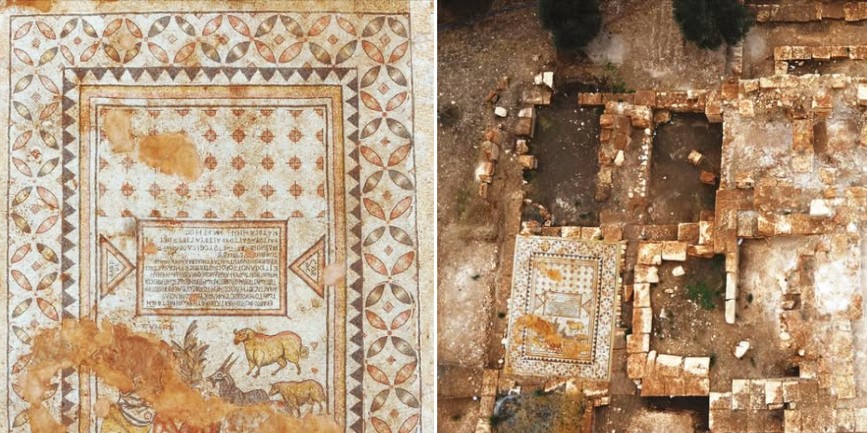
Mardin Culture and Tourism Director Ayhan Gök told AA reporter that they have been working in the agora area of the ancient city for the past few years, displaying the artifacts they have excavated in the museum and preserving some on site: "The newest finding is a mosaic. We believe it was used for decoration, on the floor of a house. We found it almost intact. This is very encouraging and a tremendous discovery for us; we have uncovered a mosaic that has remained untouched for 1500 years. The mosaic is approximately 50 square meters. We can understand that its 2-3 parts were restored during the ancient period. The discovery of the mosaic has greatly excited us. We will extract it as a single piece."
 Dara Excavation Supervisor Archaeologist Dr. Devrim Hasan Menteşe, who stated that they have been conducting studies to understand the function of the shops in the marketplace in the city through excavations in recent years, said: "We found many pieces of evidence about what was done in these shops. We noticed that most of these shops' floors were paved with mosaics. We found these pieces in many places, but we couldn't find many of them as a whole. The ancient city has a very rich culture in terms of mosaics, especially in the agora section and in the residences we think belonged to shop owners. A few weeks ago, we found a mosaic. We have now extracted more than half of it, but with the test pits we opened, we saw that it is a complete mosaic. It forms a whole. It is a fairly large room.
 Menteşe stated that within recent excavations, they understood that Dara Ancient City was not only for military purposes but also one of the most important trade centers of Rome in Mesopotamia, saying, "At the same time, the religious inscriptions we found show that the ancient city was a religious point, or at least a place of pilgrimage."
Source: Halil İbrahim Sincar /AA
(1)https://kvmgm.ktb.gov.tr/Eklenti/91068,mardin-dara-antik-kentipdf.pdf?0 (KÜLTÜR VARLIKLARI VE MÜZELER GENEL MÜDÜRLÜĞÜ Dara Antik Kenti Tanıtım Kitapçığı)
(2)https://tr.wikipedia.org/wiki/Dara_(antik_kent)
(3)https://dergipark.org.tr/en/download/article-file/3034420 , Karataş, L. (2023).Anastasiopolis /Dara Antik Kenti: Nekropol Alanı Büyük Galerili Mezar. Kültürel Miras Araştırmaları Dergisi, 4(1), 29-42.
Tosun, M. 2018 “Kuruluş, Yükseliş Ve Çöküşü İle Roma’nın Mesopotamia’daki Son Varlık Göstergesi: Dara (Anastasiopolis-Iustiniana Nova)”, Amisos, 3/5, 455-480
Recent News
Street unearthed in Aspendos
Restoration of Haydarpaşa Station continues
#Haydarpaşa Train Station #Lefke Stone (sandstone) #Hereke Granite
Stoneline Publications’ third book: SELİMİYE
Sümela Monastery reopened to visitors

International Mustafa V. Koç Underwater Archaeology Symposium
#Prokonnesos quarry #Verde Antico #Marmor Docimium, Pavonazzetto, Afyon Violet
The Granikos Battlefield has been placed under protection
#Marmara marble #Prokonnesos marble #Granikos Battle
The Second Edition of Mimarlar İçin Doğal Taş Rehberi and the English Edition, Natural Stone Guide for Architects, Have Been Published
One of the main streets of Ancient Side has been unearthed
#conglomerate #Side Ancient City #Feriştah Alanyalı
The historic Yalı Pavilion is to be reconstructed
The theme of the Edirne Biennial: Bridges