Newly renovated, Karaköy Palas has reopened
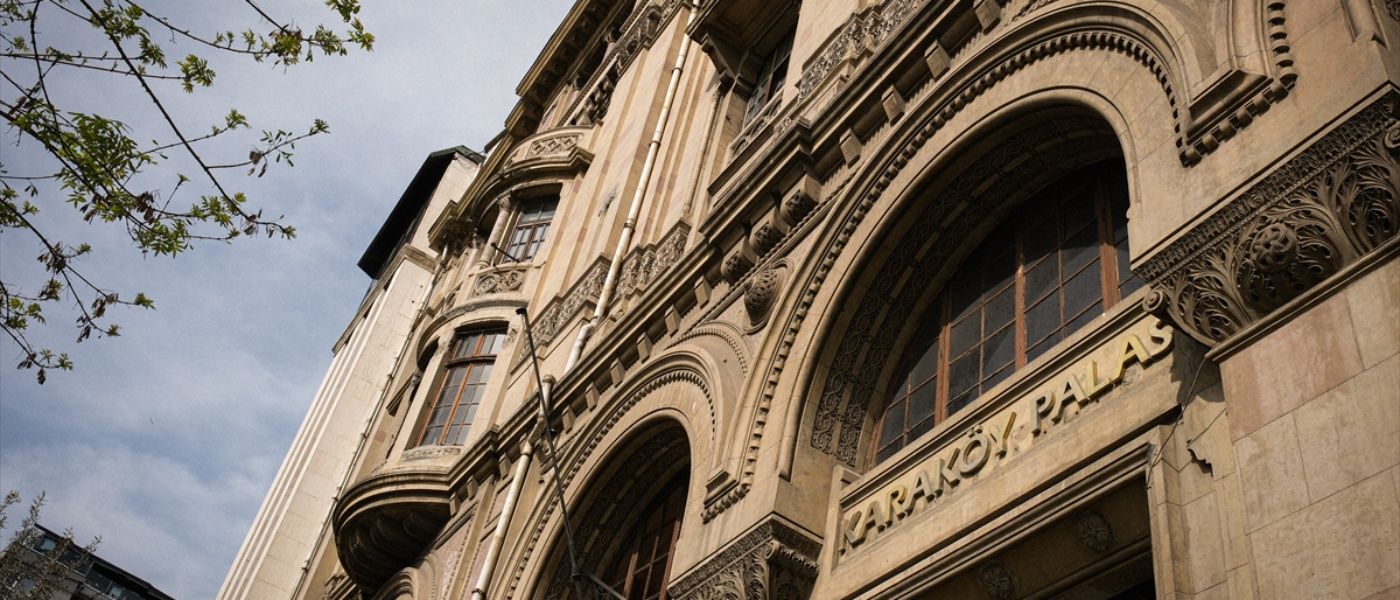
Karaköy Palas has reopened its doors after being transformed from a building that served various purposes over the years into a contemporary space for production and interaction. Through a project initiated by the Culture and Civilisation Foundation (KÜME), the 106-year-old building in Beyoğlu’s Karaköy district has been repurposed as a new meeting point and a space for production and interaction for artists and art lovers, given its location in an area where art galleries and independent artistic production spaces are concentrated.
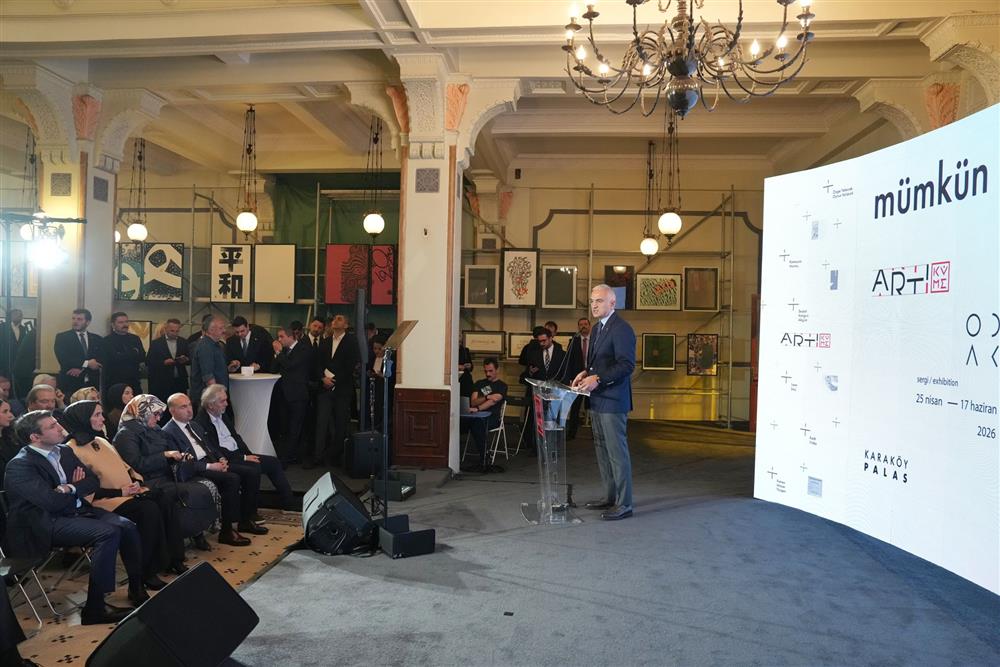
The event was opened with a programme attended by Mehmet Nuri Ersoy, Minister of Culture and Tourism, and hosted by Selçuk Bayraktar, Chair of the KÜME Board of Trustees, and Abdullah Eren, Chair of the Executive Board. During the opening ceremony, the ArtıKÜME 2025 selection was presented, along with the foundation’s ODAK project and the “ODAK 2025” printed catalogue. Noting that the ODAK project, a data-driven cultural memory initiative, would play a significant role in the systematic documentation of artistic production and events, Ersoy stated that this framework would serve as a comprehensive guide for both artists and researchers.
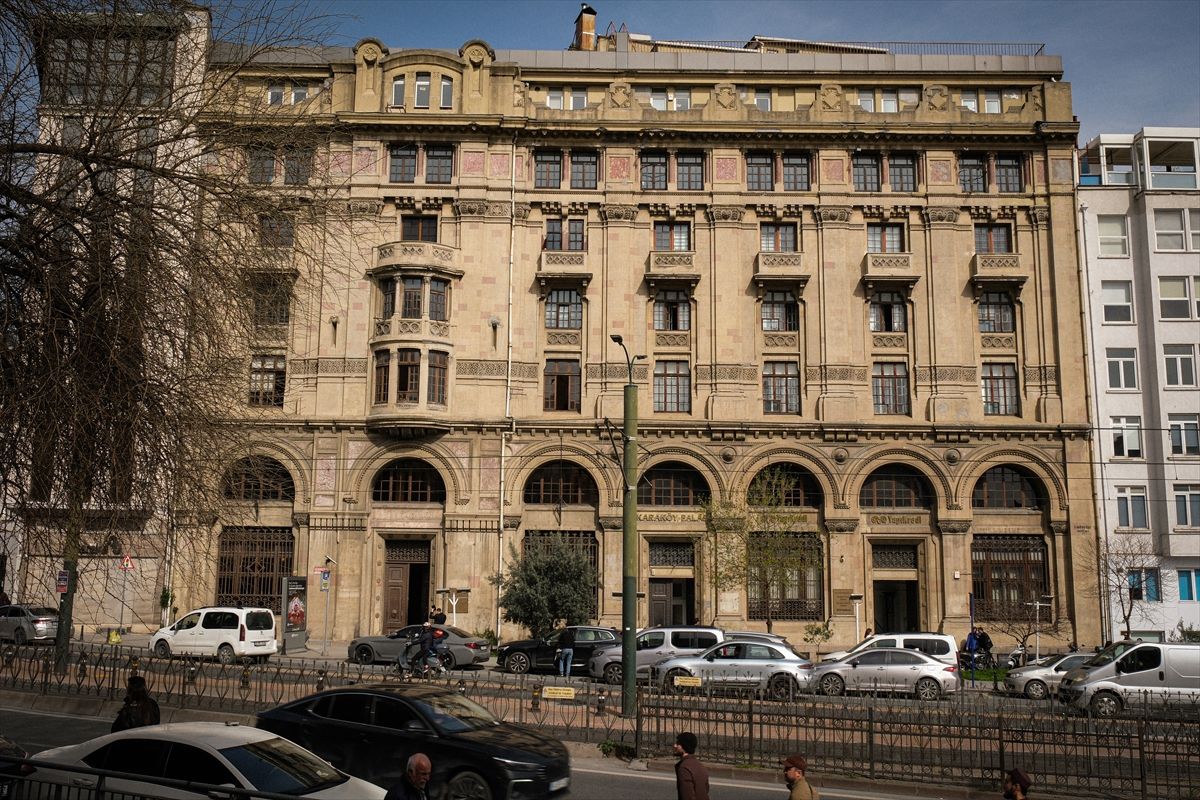
Photo: AA
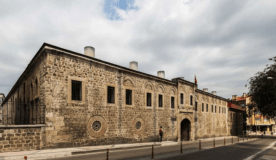
The Stone Details of Karaköy Palas
The building, which served as a branch for banks such as Halkbank and Yapı Kredi for many years, has been transformed into a cultural and arts centre as part of this restoration. The 106-year-old building, which has served various purposes over the years, was designed by the Istanbul-born Levantine architect Giulio Mongeri and constructed in 1920. The renowned architects of the period, Mimar Vedat Tek and Mimar Kemaleddin Bey, were also involved in the building’s initial construction phase.
Karaköy Palas was originally constructed using stone in a masonry system. Stonework plays a central role in both the building’s structural system and its façade decoration. The façade is enlivened by coloured stones and geometric motifs arranged in a free-flowing rhythm. Porphyry panels have been used in the façade decorations and entrance areas, particularly to highlight the left-hand entrance. This hard, typically dark-coloured volcanic stone complements the building’s aesthetics as a decorative element referencing Byzantine architecture. Porphyry, a prestigious material often sourced from the Mediterranean basin or as spolia from older structures in the region, has featured in architectural projects.
For the main body and exterior façade of the building, Küfeki stone (limestone) – commonly used in Istanbul’s historic structures – was selected. This stone is soft and easily workable when first quarried, but hardens and becomes more durable as it absorbs carbon dioxide upon exposure to air. Traditionally, Küfeki stone was quarried in the Bakırköy area (particularly the surrounding regions) and in the vicinity of Hasköy on the European side of Istanbul.
During the restoration process carried out by KÜME between 2024 and 2026, the protective patina was preserved by using laser and pure water techniques for stone cleaning, in accordance with the ‘minimum intervention’ principle.
Giulio Mongeri is one of the architects who best harnessed the structural and decorative potential of stone. The rich stonework and Neo-Byzantine influence evident at Karaköy Palas reach their zenith in the architect’s designs for Maçka Palas and the Ankara Agricultural Bank Headquarters.
Mongeri, who lived between 1873 and 1951, was an Italian architect who, following his education at the Brera Academy in Milan, carried out his work primarily in Turkey, and particularly in Istanbul and Ankara. Among his major works in Turkey are the Church of St. Anthony, Karaköy Palace, Maçka Palace, the plinth of the Atatürk Statue in Taksim Square, the headquarters of the Agricultural Bank in Ankara, the Ottoman Bank and İş Bank, and the Çelik Palace Hotel in Bursa.
References:
1 Aktemur, Ali Murat, 2006. ''Karaköy’de Batı Üslubunda Yaptırılmış Sivil Mimari Örnekleri.'' Doktora tezi, Atatürk Üniversitesi. Last accessed: 6 Mayıs 2026.
2. İtalyan Kültür websitesi. Last accessed: 6 Mayıs 2026
3.Küre ansiklopedisi
4. Kültür Envanteri (Karaköy Palas maddesi)
5. KÜME Foundation restoration reports
6. Erdoğan, E. G., 2022. I. Ulusal Mimarlık Akımı ve Karaköy Örnekleri.
7. Batur, A., 2021. Matbudan Dijitale . Maçka Palas ve Giulio Mongeri*, manifold.
8. Karaköy Palas, İstanbul'daki Tarihi Yapıların Dünü ve Bugünü, degisti.com.
9. Can, C., 1993. “İstanbul’da 19. Yüzyıl Batılı ve Levanten Mimarların Yapıları ve Koruma Sorunları.” Doktora Tezi, Yıldız Teknik Üniversitesi.
10. Batur, A., 2005. M. Vedad Tek: İmparatorluktan Cumhuriyete Bir Mimar.
11. Cengizkan, A., 2005. Mimar Giulio Mongeri ve İstanbul’u. Mimarlar Odası Yayınları.
12. Yavuz, Y., 1981. Mimar Ahmed Kemalettin ve Birinci Ulusal Mimarlık Dönemi. ODTÜ Mimarlık Fakültesi Basım İşliği.
Recent News
Street unearthed in Aspendos
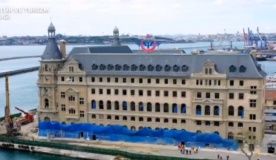
Restoration of Haydarpaşa Station continues
#Haydarpaşa Train Station #Lefke Stone (sandstone) #Hereke Granite
Stoneline Publications’ third book: SELİMİYE
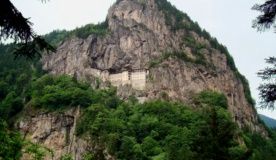
Sümela Monastery reopened to visitors
International Mustafa V. Koç Underwater Archaeology Symposium
#Prokonnesos quarry #Verde Antico #Marmor Docimium, Pavonazzetto, Afyon Violet
The Granikos Battlefield has been placed under protection
#Marmara marble #Prokonnesos marble #Granikos Battle
The Second Edition of Mimarlar İçin Doğal Taş Rehberi and the English Edition, Natural Stone Guide for Architects, Have Been Published
One of the main streets of Ancient Side has been unearthed
#conglomerate #Side Ancient City #Feriştah Alanyalı
The historic Yalı Pavilion is to be reconstructed
The theme of the Edirne Biennial: Bridges