
Item 1 of 1
Properties
Properties of the Stone
Additional Names
Marmor Troadense, Granito Violetto
Color
Grey+Purple+White
Scientific Classification
Ouartz Monzonite
Commercial Classification
Granite
Quarry Site:
Çanakkale-Türkiye
Quarry State
Active
Quarry Site
The most important ancient quarries for Kestanbol Granite today are located in the Yahyaçavuş (Koçali) and Akçakeçili villages within the Ezine district of Çanakkale province. Among these, the quarry of Yeditaşlar, located at the foot of Mount Çığrı near the ancient city of Neandria, is one of the most significant production centers of Kestanbol Granite. This site is renowned for its abandoned, massive, semi-processed columns which average 11.00 meters in length and 1.70 meters in diameter.
The stones produced in these ancient quarries were transported to the nearby ancient port of Dalyan (Alexandria Troas), from where they were loaded onto ships and sent, primarily as semi-processed columns, to Mediterranean countries for construction projects.
Nomenclature
Kestanbol Granite, an actively quarried stone, has been extracted since the Roman Empire, particularly between the 2nd and 6th centuries. This igneous stone, characterized by its porphyritic texture, is classified as ‘Quartz Monzonite.’ Originally produced in the Troad region, it was known as ‘Marmor Troadense,’ and referred to by Italian stonemasons as ‘Granito Violetto’ due to its distinctive color. During the Ottoman Empire the stone was also extensively quarried, when it became known as ‘Kestanbol Granite,’ named after the village of Kestanbol (Old Istanbul, now Uluköy).
Usage Areas
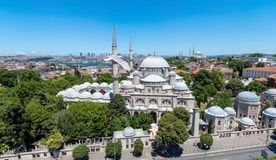
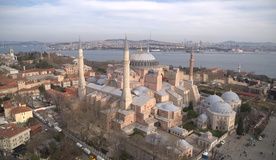
It was predominantly used for columns in both the interiors and exteriors of historical buildings. Today, Çanakkale Kestanbol Granite continues to be quarried.
_276x160.jpg)
_276x160.jpg)
_276x160.jpg)
_276x160.jpg)
_276x160.jpg)
_276x160.jpg)