Item 1 of 1
Properties
Properties of the Stone
Additional Names
Marmor Celticum, Bianco e Nero Antico
Color
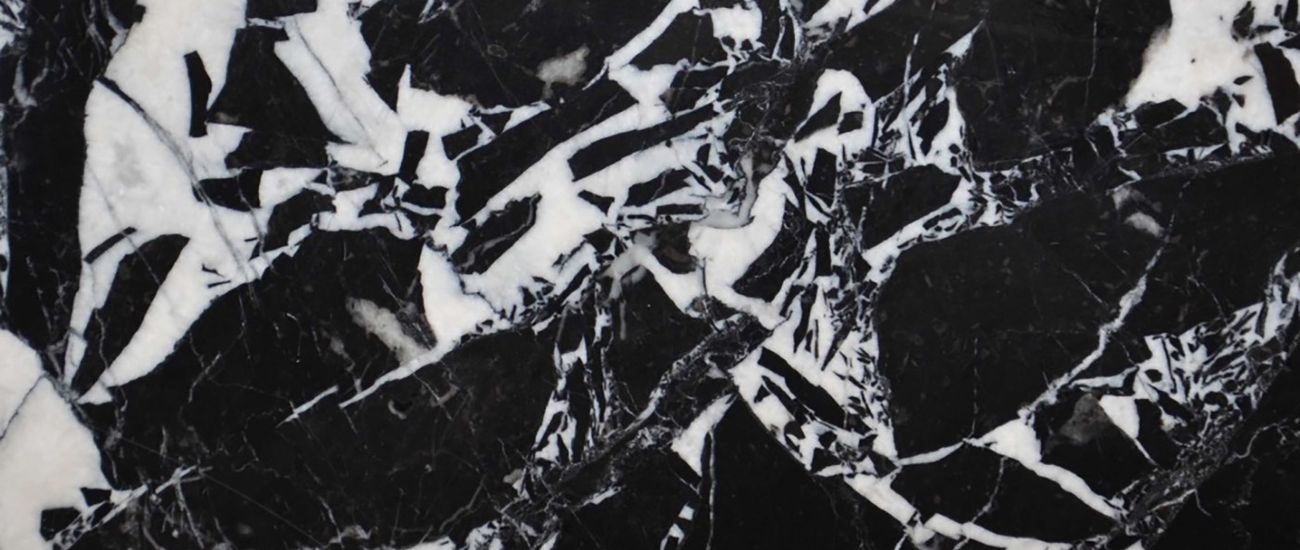
Black+White
Scientific Classification
Brecciated Limestone
Commercial Classification
Marble
Quarry Site
Aubert-France
Quarry State
Active
Quarry Location, Geological Origin, and Nomenclature
Celtic Breccia, quarried from the ancient quarries in the Celtic-Aubert region of France in the Pyrenees Mountains by the Romans in the 3rd or 4th century, is a striking black and white marble with bold geometric forms. Classified as tectonic breccia, it features dark grains interspersed with white calcite. During the Roman Empire, this stone was known as ‘Marmor Celticum,’ and Italian stonemasons referred to it as ‘Bianco e Nero Antico.’
Areas of Architectural Application
Celtic Breccia is suitable for a variety of interior applications, including flooring, wall cladding, countertops, and stair treads. It is also used in exterior applications such as façade cladding or landscape design.
Use of Celtic Breccia in Monumental Architecture
Celtic Breccia has seen widespread application in important religious and historical buildings since ancient times. In the Roman era, it was used in monumental building, including churches and public structures. Most notably, it was employed as decorative panels in Hagia Sophia. Celtic Breccia can be found in St Peter’s Basilica in Rome, St Mark’s Basilica in Venice, and Westminster Cathedral in London as well as at Versailles and in Les Invalides in France.
_276x160.jpg)

_276x160.jpg)